

Israel’s Forever Wars
How each war seeds the next.

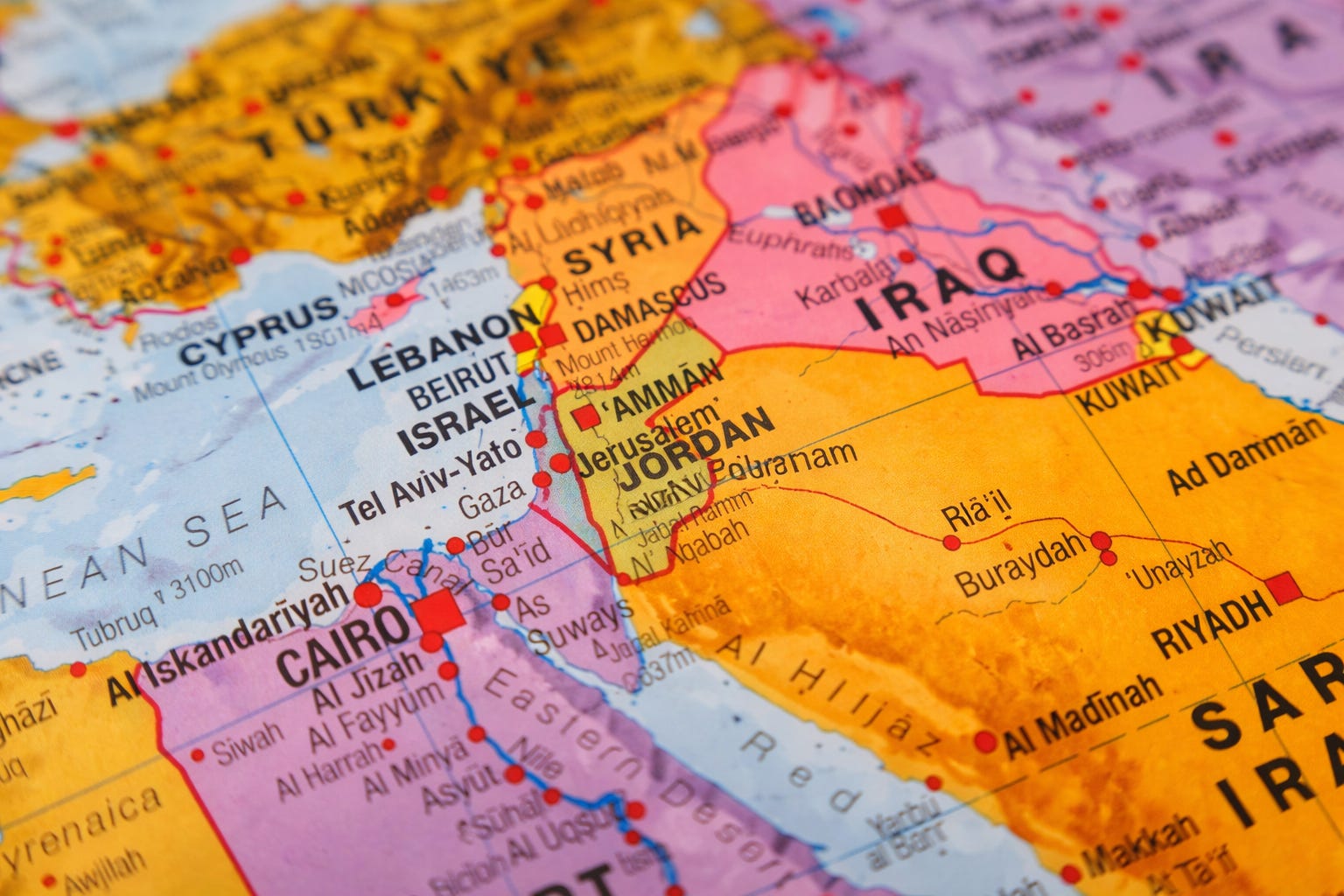
In 1982, Israel invaded Lebanon in order to flush out and destroy the PLO. After Jordan expelled the organisation from its territory in 1971, southern Lebanon and West Beirut became its principal base of operations. Israel’s invasion was supposed to end that threat. In part, it succeeded. The PLO was driven out and weakened, a development that would eventually pave the way for the Oslo process.
But cutting off one head of the hydra only helped create another.
The invasion accelerated the destabilization of a country that had previously been prosperous, secular and cosmopolitan before Lebanon became increasingly entangled in the wider Arab–Israeli conflict and the Israeli–PLO struggle that spilled over its borders. Many forget that Beirut was once regarded as the Paris of the Middle East.
Israel’s intervention also saw it arm and support Christian Maronite militias, further fueling the civil war that had begun in 1975. Beirut was devastated, and Lebanon’s civilian population was caught in a brutal crossfire. The resulting power vacuum created an opportunity for Iran and its proxy Hezbollah, which would emerge as a far more powerful and emboldened organization than the PLO ever was. Israel would ultimately find itself occupying southern Lebanon for nearly two decades before finally withdrawing.
The United States was drawn in as well. US Marines deployed as part of a multinational peacekeeping force became entangled in the civil war, culminating in the horrific 1983 bombing that killed 241 American servicemen, the deadliest attack on US forces since the Second World War.
Peace, in other words, did not come. Since that first invasion, around 1,400 Israeli soldiers have been killed. In response to these losses, Israel has now launched a new incursion and resumed bombing areas of Beirut that it has identified as Hezbollah positions. Furthermore, these strikes are not occurring in isolation; rather, they are part of the broader US–Israeli campaign against Iran that began on February 28. This campaign unfolds in the aftermath of the devastating war in Gaza, which followed the Hamas attacks of October 7, 2023. Notably, the Gaza war alone has produced tens of thousands of deaths and widespread destruction — an outcome that critics, including some Israeli analysts, warn risks further radicalizing Palestinian opinion and parts of the wider Muslim world.
So the question remains: what is Israel’s endgame? Israel has unquestionably demonstrated overwhelming military superiority across the region. But military supremacy has not delivered lasting peace, nor are repeated campaigns against an expanding list of enemies likely to do so. Since 1980, Israel has conducted military strikes beyond its borders in Lebanon, Syria, Iraq, Iran, Tunisia, Sudan and, more recently, Yemen, in addition to repeated operations in the Palestinian territories.
The country now spends roughly 9 per cent of its GDP on defense, close to 15 percent of its national budget. Israel has become a nation permanently mobilized for war, where citizens are accustomed to running for bunkers at a moment’s notice.
Where does this end?
The vision of a “Greater Israel,” embraced by some far-right and ultra-nationalist factions in Israeli politics and echoed by certain Christian nationalist voices in the United States, is unlikely to bring security to Israel’s borders. If anything, it runs the risk of perpetuating an endless cycle of violence. Indeed, recent history suggests a sobering pattern: each new generation of militant movements seems more radical and more brutal than the last.
Ultimately, lasting security will not come through military dominance alone. It will come only through a political settlement that allows Israelis and Palestinians, and the wider region, to coexist in peace. That may sound utopian, but history offers examples where seemingly intractable conflicts were eventually resolved: Northern Ireland, South Africa, East Timor. Peaceful coexistence is not naïve. It is the only path that has ever truly broken cycles of violence.